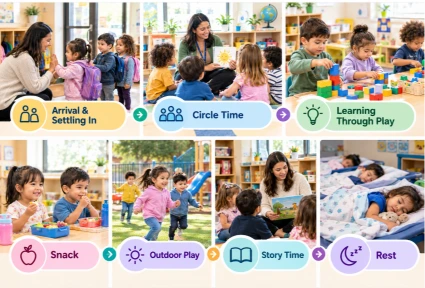
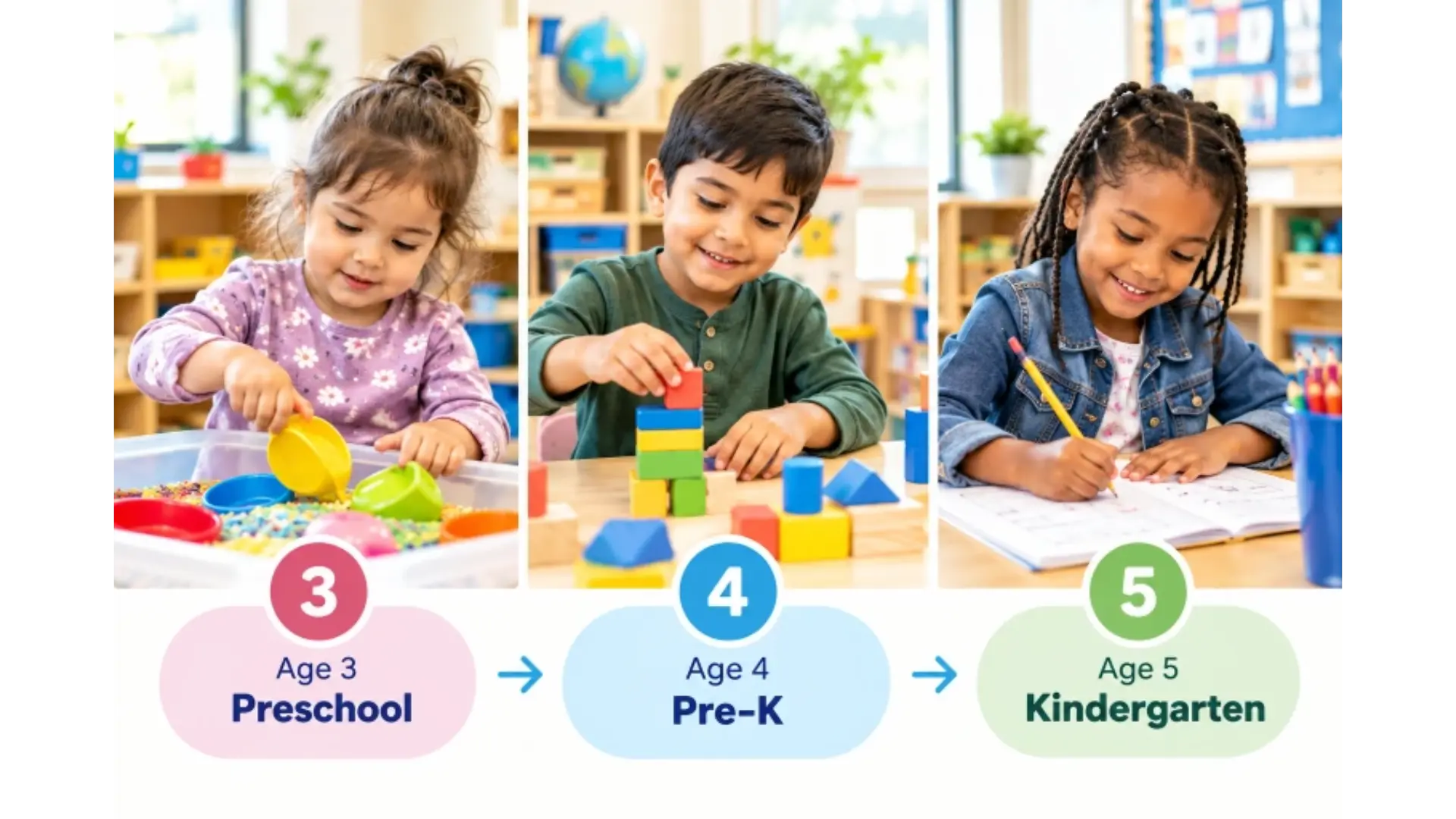
Preschool is the earliest structured setting most kids experience outside the home, and it’s built around play, not academics. Children ages 2 to 3 spend their day exploring, practicing sharing and turn-taking, and building the kind of independence that makes later school stages possible.
Nothing here is about worksheets. A preschool day might include sensory bins, building blocks, story time, and outdoor play, all woven around naps and snack breaks. The goal isn’t to teach reading. It’s to help a toddler become a kid who can sit through circle time and follow a two-step direction.
Richmond Learning Academy’s own Preschool Program serves this exact age group, ages 2 to 3, using play as the primary teaching tool.
What Is Pre-K?
Pre-K is the year right before kindergarten, built for 4-year-olds, and it looks noticeably more structured than preschool. Kids still play, but the day starts adding intentional academic groundwork: letter sounds, counting, and following multi-step routines that prepare them for a real classroom.
This is where the confusion usually starts, because “pre-k” and “prek” get used loosely, and some families also hear the term “PK3” for a pre-k style class built for 3-year-olds. That specific split matters enough that it gets its own section further down.Richmond Learning Academy’s Pre-K Program is designed for 4-year-olds and follows this readiness-focused approach.
What Is Kindergarten?
Kindergarten is the first year of formal schooling, typically for children around age 5, and it’s where academic instruction becomes the actual point of the day. Reading, writing, and math move from introduction to instruction. The schedule looks like real school: a full day, a set calendar, and defined academic goals.
One thing worth being direct about: Richmond Learning Academy prepares children for kindergarten through its Pre-K program, but does not operate a kindergarten itself. If you’re searching for kindergarten options near you specifically, that search leads to your local public or private elementary school, not a childcare center. What a strong pre-K program does is make sure your child walks into that kindergarten classroom ready.
Is Pre-K Required in Texas?
No, pre-K is not required statewide in Texas, though the rules around it are more layered than a simple yes or no. Kindergarten attendance is generally expected once a child reaches the district’s cutoff age, while pre-K eligibility and funding depend on factors that shift by district and by year.
This is exactly the kind of detail worth confirming directly rather than guessing at. Age cutoffs, income-based eligibility for state-funded pre-k, and specific enrollment windows all vary by school district, so the most reliable move is a quick call to your local district or campus. That single call saves you from planning around a rule that may not apply to your specific school.
Comparing preschool, pre-K, and kindergarten side by side only helps if you also know which requirements actually apply where you live.
Which Stage Is Right for My Child’s Age?
Start with your child’s age on the first day of the school year, not their age when you’re reading this. A 3-year-old who just turned 3 belongs in preschool. A 4-year-old, or a 3-year-old close to turning 4 before the cutoff, is usually ready for pre-k. A 5-year-old who meets your district’s age requirement moves into kindergarten.
Birthdays close to a cutoff date make this genuinely harder to figure out. If your child’s birthday falls within a few weeks of your district’s kindergarten age cutoff, that’s worth a direct conversation with the district rather than a guess based on what worked for a friend’s kid.
PK3 vs. PK4: Why the Age Split Matters
PK3 refers to a pre-k style class built specifically for 3-year-olds, while PK4 is the traditional pre-k year for 4-year-olds heading into kindergarten the following year. The distinction matters because a PK3 classroom moves slower and leans more on play than a PK4 classroom does, even though both get called “pre-k” casually.
At Richmond Learning Academy, a 3-year-old in this range fits naturally into the Preschool Program, while a 4-year-old moves into the dedicated Pre-K Program built around kindergarten readiness.
How Do I Know If My Child Is Ready?
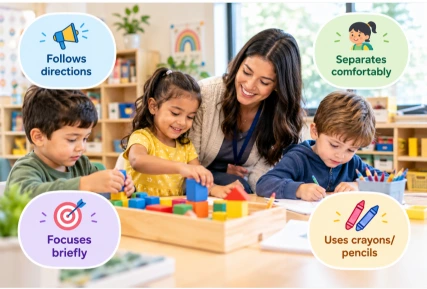
Readiness shows up in specific behaviors, not vague feelings, and it looks different for pre-K than it does for kindergarten. For pre-K, look for a child who can separate from you without prolonged distress, follow a simple two-step direction, and use the bathroom independently or close to it.
For kindergarten readiness, the bar moves up. A child heading into kindergarten should generally be able to sit and focus for a short structured activity, recognize their own name in print, hold a pencil or crayon with some control, and interact with a small group of peers without constant adult mediation.
None of these signs need to be perfect. Kids develop unevenly, and a strong program adjusts to where your child actually is, not where a checklist says they should be.
Can My Child Skip a Stage?
Yes, in some cases a child can skip a stage, though it depends more on readiness than on age alone. A child who’s had strong social and academic exposure at home or in another childcare setting can sometimes move from preschool directly into kindergarten, skipping a formal pre-k year.
That said, skipping pre-k means skipping the specific bridge-building it’s designed to provide: structured routines, early literacy exposure, and practice with a full-day school schedule. If you’re considering it, talk to your prospective kindergarten teacher or the school directly about what gap, if any, that would leave for your specific child.
Is Private Pre-K the Same as Public School Pre-K?
Not automatically, though the two are usually built around similar goals. A private pre-K program, like a licensed childcare center’s, generally follows the same age range and readiness focus as public school pre-K, covering early literacy, math exposure, and structured routines.
What isn’t guaranteed is recognition. Some districts treat a private pre-K year as equivalent preparation, while others have their own specific expectations for incoming kindergartners regardless of where they spent the year before. If this matters to your plans, a quick conversation with your target elementary school clears it up faster than assuming either way.
What a Typical Day Looks Like in Each Program
A preschool day and a pre-k day can look similar on paper and feel completely different in practice. Preschool leans heavily on free play, sensory activities, and open-ended exploration, with structure built around routines like snack and nap rather than lessons.
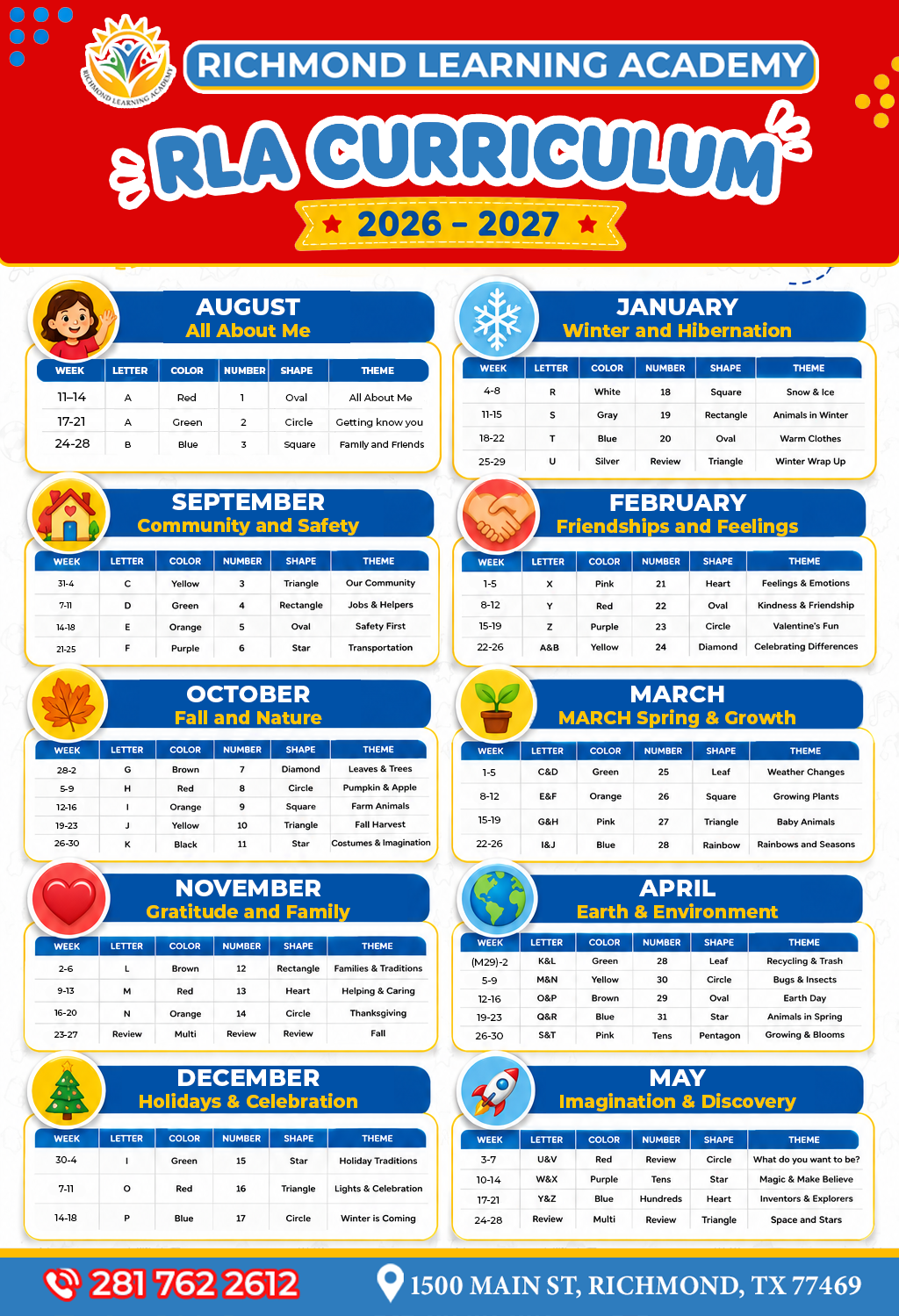
A pre-k day adds intentional teaching moments inside that same friendly structure. Circle time might include letter recognition or counting practice. Centers get more purposeful, built around specific skills rather than open exploration alone. At Richmond Learning Academy, the Frog Street Curriculum shapes this shift, using a research-based, play-based approach that still builds toward real academic readiness rather than dropping play entirely.
The difference isn’t that one day has fun, and the other doesn’t. It’s that pre-k starts layering purpose underneath the fun.
How to Tell If a Preschool or Pre-K Program Is High Quality
Look past the marketing language and check for three concrete things: licensing status, staff qualifications, and any state quality recognition the program has actually earned. These are verifiable, not just claimed, and any program worth considering should be able to point to them directly.
In Texas, that means confirming a program is licensed through the Texas Health and Human Services Commission, often shortened to HHSC, and checking whether it holds a Texas Rising Star Certificate, the state’s highest quality recognition for childcare providers. Richmond Learning Academy holds both, which is worth mentioning not as a sales pitch but because it’s exactly the kind of detail this section is telling you to check for anywhere you’re considering.
Beyond the paperwork, walk the space if you can. A quality classroom feels calm even when it’s busy, and staff should be able to describe what your specific child would be working on, not just recite a general philosophy.
Curious what a Texas Rising Star recognized classroom actually looks like day-to-day? Take a look at our Pre-K program.
Preschool and Pre-K in Richmond, TX
Families searching for pre-kindergarten Richmond options, or comparing pre-K Richmond programs, are usually trying to solve the same problem this whole page has walked through: figuring out which stage actually fits their child right now. Richmond Learning Academy serves families across Richmond, Rosenberg, Sugar Land, Missouri City, and Katy in Fort Bend County, with both a Preschool Program and a Pre-K Program under one roof.
If you’re weighing preschool or pre-K for a child in the Richmond area, our team is happy to walk you through both options in person. Call us at 281-762-2612 to set up a visit.
Conclusion
That mix of “preschool,” “pre-k,” and “kindergarten” you keep hearing from other parents isn’t a sign you missed something. It’s three different stages with genuinely overlapping language, and now you know what separates them: age, structure, and how close your child is to that first formal school year.
Whichever stage fits your child right now, the next step is simple. Come see the classrooms for yourself. Schedule a tour of Richmond Learning Academy and get your questions answered face to face.