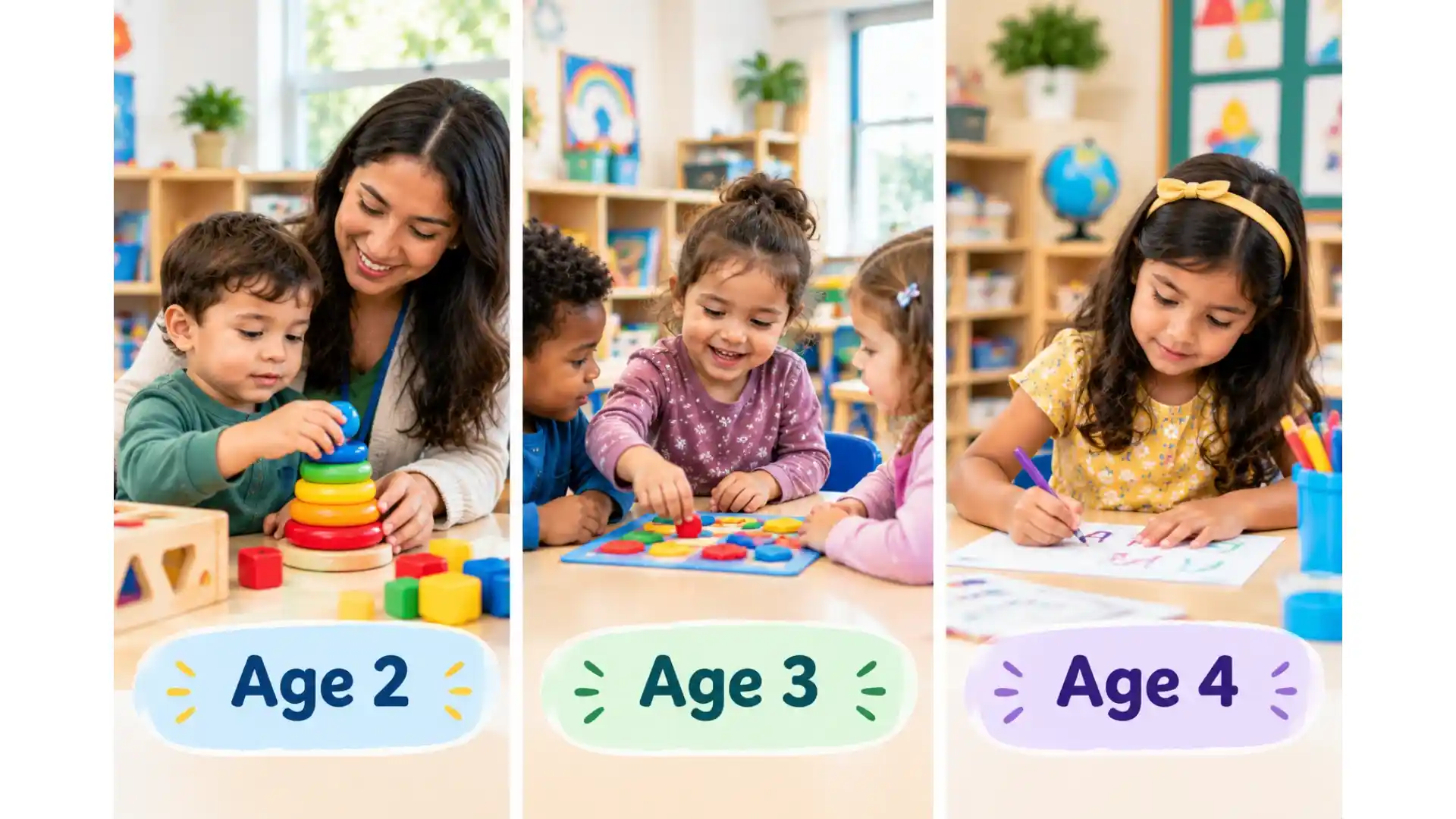
You’ve probably run the math a dozen times already. Your child turned two last month, or three next week, or is already four and hasn’t started anything formal yet, and every version of that math comes with its own worry attached. Too young feels like throwing them into something they’re not ready for. Too old feels like you already missed a window everyone else’s kid walked through months ago.
There isn’t one correct age. There is a real, useful answer though, and it has less to do with a birthday and more to do with a specific set of things your child can already do. This piece breaks that answer down by age, two, three, four, and five, since what “ready” looks like at each of those ages is genuinely different, not a smaller or bigger version of the same checklist.
Is There One “Right” Age for Preschool?
Most children in the US start somewhere between three and four, and that number gets repeated so often it starts to feel like a rule instead of an average. It’s an average. Averages describe a group, not your specific kid sitting across from you at breakfast this morning.
Here’s the part that actually matters more than the number: starting too early and starting too late carry real, different downsides, and both are worth naming honestly instead of only worrying about one direction.
Start before a child can handle a few hours away from a parent without ongoing distress, and the early weeks turn into a rough adjustment that can color how they feel about the whole experience. Wait long past when a child is showing clear interest in other kids and structured activity, and you risk a different problem: a bored, understimulated kid who’s ready for more than home alone can offer, and a harder adjustment later once the gap between them and their eventual classmates has grown wider. Neither mistake is permanent. Both are avoidable once you know what to actually check for instead of going by age alone.
Preschool for Two-Year-Olds: Is It Too Soon?
Two is the age where this question gets asked the most anxiously, usually because “preschool” conjures an image of circle time and worksheets that doesn’t match what a two-year-old can actually do yet. A quality program built for this age looks nothing like that, and it shouldn’t.
Signs a Toddler Is Ready to Start
A two-year-old doesn’t need to be independent to be ready. They need to show a few specific things: they can be handed off to another trusted adult without hours of ongoing distress afterward, they show real curiosity when other kids are nearby instead of ignoring them entirely, and they can follow one simple instruction, like “put the block in the basket,” most of the time. None of that requires potty training or full sentences. It requires a toddler who’s starting to look outward.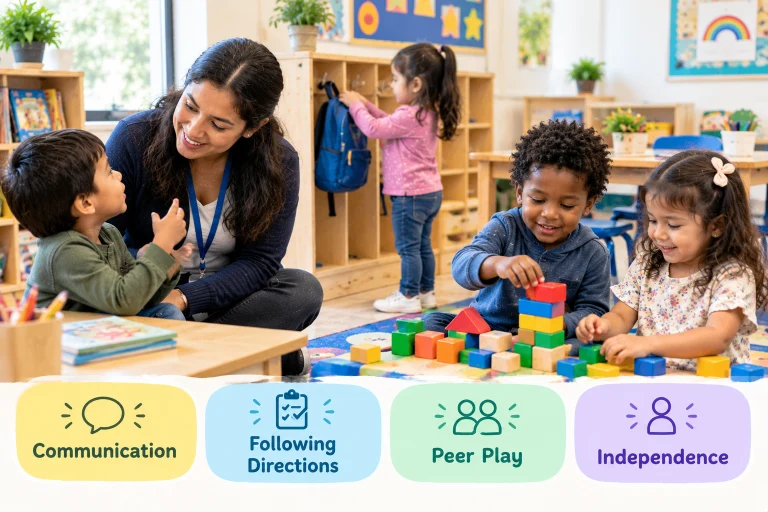
Signs It Might Be Worth Waiting a Few Months
If separation still means an hour or more of inconsolable crying with no improvement over several attempts, that’s real information, not a failure on your part or your child’s. Some toddlers need a few more months of secure, one-on-one attachment before a group setting clicks for them. Waiting three or four months and trying again is a completely normal path, and it costs a child nothing developmentally. What actually helps here is a program willing to ease a toddler in gradually, shorter days at first, a familiar object from home allowed in the room, rather than one that expects a full day to work immediately or not at all.
What Age Should My Child Start Preschool?
You’ve run the math a dozen times, and every answer comes with its own worry attached. There isn’t one correct age, just a specific set of things your child can already do, and that’s what the next few sections walk through.
Preschool for Three-Year-Olds: The Most Common Starting Age
If you searched for this topic and landed here, there’s a decent chance your child just turned three or is about to. That’s not a coincidence. Age three is the single most common starting point nationally, and there’s a real developmental reason for that instead of it just being a convenient milestone number.
What Readiness Looks Like at Age Three
By three, most kids have crossed a few thresholds that make a structured group setting actually productive instead of overwhelming. Language is usually developed enough to express a basic need out loud (“I need help,” “my tummy hurts”) rather than relying entirely on crying or pointing. Potty training is often underway, though rarely complete, and a program built for this age should expect that rather than require full independence on day one. Socially, a three-year-old starts wanting to play alongside or with other kids, not just near them, and can usually follow a two-step instruction like “put your cup on the table and grab your shoes.”
None of these need to be perfect. A three-year-old who’s still having potty accidents or occasionally melts down over a shared toy is well within normal range for this age, not behind it. What matters is the general direction: more words, more interest in peers, more ability to handle a short wait or a small disappointment than they had six months ago.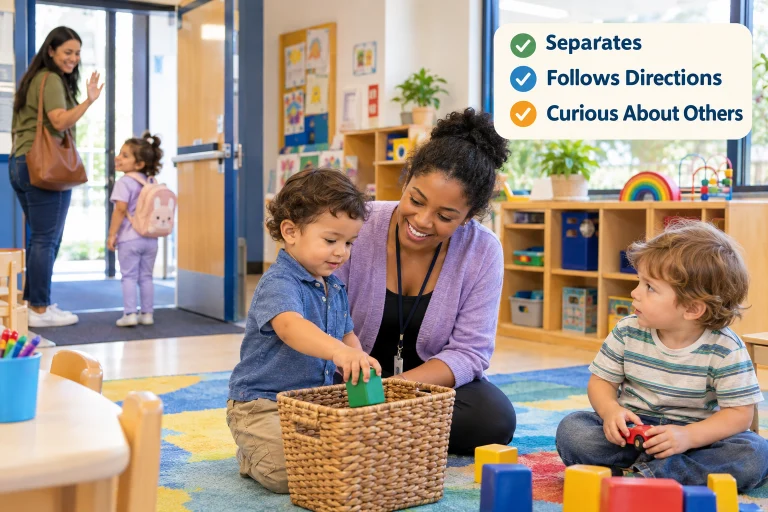
Preschool for Four-Year-Olds: Starting Strong, Not Starting Late
If your child is four and hasn’t started a formal program yet, the anxious math probably sounds like this: everyone else started at three, so we’re already a year behind. That math doesn’t hold up. A four-year-old starting now isn’t playing catch-up. They’re starting at an age where a huge amount of genuine, fast progress is still very much available in a single year.
What a Strong Pre-K Year Can Still Build Before Kindergarten
A focused pre-k year at four does specific, concrete work: following multi-step instructions without needing them repeated, sitting through a structured group activity for a stretch of time, recognizing letters and early sounds, and practicing the classroom routines (lining up, waiting for a turn, raising a hand) that a kindergarten teacher will assume already exist on day one. A child who starts at four and gets a real, structured year of that work generally arrives at kindergarten just as ready as a peer who started at three, sometimes more so, since a four-year-old’s attention span and verbal skills make some of that learning move faster than it would have a year earlier.
Preschool for Five-Year-Olds: Kindergarten, Pre-K, or One More Year?
Five is a different kind of decision than two, three, or four, because it usually isn’t just “should my child start preschool.” It’s “should my child start kindergarten this year, or would one more year of pre-k serve them better.” This comes up most often for kids with a birthday that lands close to your school district’s kindergarten cutoff date.
Choosing an extra pre-k year for a child with a late birthday, sometimes called redshirting, is a common and reasonable decision, not a sign anything is wrong. It tends to make the most sense for a child who’s developmentally young for their age group, not just young by the calendar, meaning a child who still struggles with the stamina, attention span, or social skills a full kindergarten day demands. It’s worth a direct conversation with your child’s current teacher or pediatrician if you’re on the fence, since they’ve watched your child in a group setting in a way you may not have the chance to.
relevant pages
Preschool Program or Pre-K Program? How to Know Which One Fits
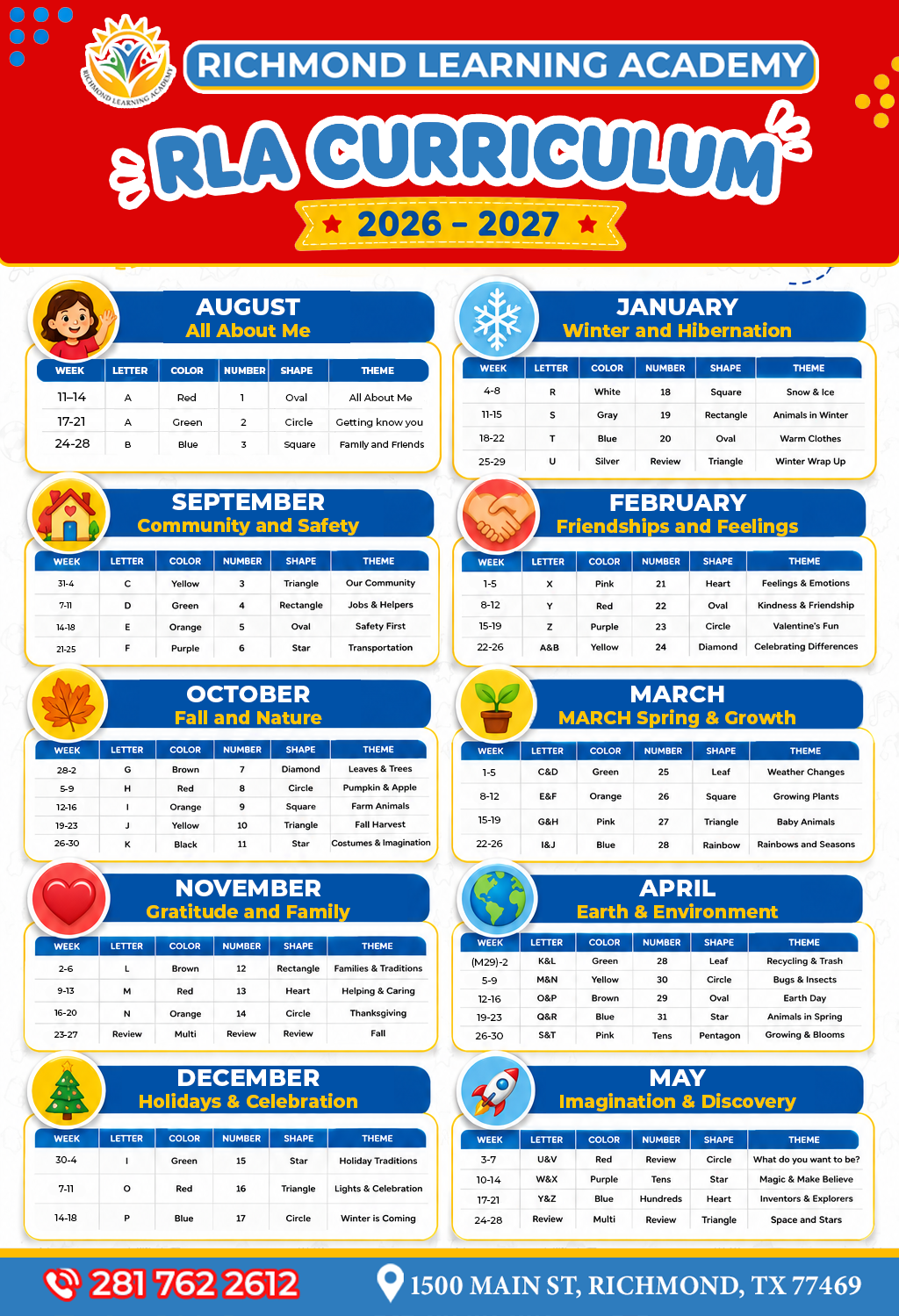
Everything above answers the age question in general terms. Here’s where it gets specific to what you’ll actually find when you go looking locally. Richmond Learning Academy structures its programs by exactly the age bands covered in this article: the Preschool Program serves ages two through three, and the Pre-K Program serves age four.
That split matters more than it might seem. If your child just turned two or three, the Preschool Program is built around exactly the readiness signs covered earlier, separation, early social interest, simple instruction-following, not the more structured, kindergarten-prep pace of the Pre-K year. If your child is four, the Pre-K Program is the one built specifically around the multi-step instructions, letter recognition, and classroom-routine practice a strong final year before kindergarten needs. A five-year-old on the redshirting path described above would also fit the Pre-K Program for that extra year, rather than being placed back into the two-to-three age band.
Is It Better to Start Preschool at 2 or 3?
This is one of the most common versions of this question, and the honest answer is that it depends on which specific things your child is already doing, not which age sounds more advanced. A two-year-old who separates easily, shows real curiosity about other kids, and follows a simple instruction most of the time is genuinely ready, and waiting a year purely because “three is more typical” doesn’t add anything for that child. A two-year-old still deep in separation distress with little interest in peers yet will likely have a smoother, more successful start at three, once a few more months of development close that gap.
Neither path is the better one in the abstract. The better one is whichever matches what your specific child can already do today, which is exactly why the age-by-age checklists earlier in this article matter more than the debate itself.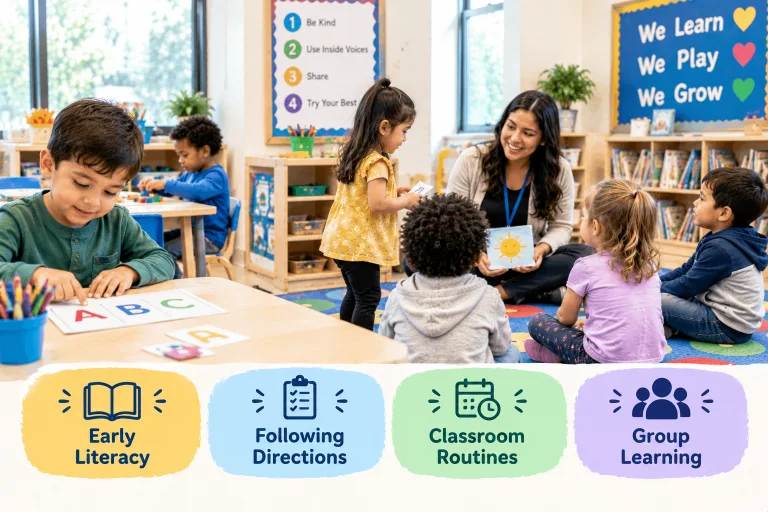
Preschool Near Richmond, TX What to Look for Once You’ve Settled on Timing
Once you’ve worked out roughly where your child falls on the readiness spectrum, the next real question is whether a specific program locally can actually deliver on it. Richmond Learning Academy, located at 1500 Main Street in Richmond, is HHSC-licensed and holds a Texas Rising Star certification, the state’s top quality recognition for childcare providers, and runs on the Frog Street Curriculum, a play-based program built around social-emotional learning, language and literacy, and early STEM skills across the age bands covered in this article.
What to Ask on a Tour, Regardless of Age
A few questions are worth asking no matter which age band your child falls into, since they tell you more about day-to-day quality than a curriculum name on a website ever can. Ask how the classroom handles a hard drop-off in the first few weeks, since that tells you whether staff are set up to ease a child in gradually or expect an instant adjustment. Ask what a typical day actually looks like hour by hour for your child’s specific age group, not just the age range on a brochure. And ask how staff communicate day-to-day progress, since a program built around real partnership with parents should have a clear answer ready without hesitation.
Ready to see which program fits your child’s age and readiness?
Call Richmond Learning Academy at 281-762-2612 or visit 1500 Main Street in Richmond to schedule a tour and talk through where your child is right now.