You’re standing in your neighbor’s driveway at 7:45 on a Tuesday, coffee going cold in your hand, watching her three-year-old count to twenty without skipping a number. Your own two-year-old is currently trying to eat a leaf off the hedge. You’re already twelve minutes behind schedule, and the whole drive to work you keep replaying that moment, wondering if you should have signed up for something by now.
Nobody hands new parents a syllabus for this. You find out what matters by watching other kids, by half-listening to a pediatrician who has four minutes with you, or by reading a blog at 11 pm because the question won’t let you sleep. Your neighbor, for what it’s worth, has no idea she just wrecked your morning. This one is written for that exact moment, the one where the coffee’s gone cold, and the leaf is still in your kid’s mouth.
The Quick Answer: Yes, It Matters, Here’s What That Actually Means
Early childhood education means structured learning and care for children from birth to age five, led by trained teachers instead of a rotating cast of relatives, babysitters, and cartoons filling the gap. It matters because a child’s brain, language, and social skills grow faster during these five years than at almost any later point in life. A two-year-old who isn’t enrolled anywhere right now is not behind. These years are simply worth taking seriously in their own right, the way you’d take seriously anything else in your child’s life that only happens once; no enrollment form required to make that true.
Am I Already Behind If I Haven’t Started Yet?
Your daughter is two and a half. The kid down the street is already sorting shapes and naming colors on command, and yours still calls every animal “dog.” That gap feels enormous standing in a driveway. It shrinks the moment you sit down with an actual child development chart, because “typical” for a two-year-old covers an enormous range, wider than most parents realize until they see it in writing.
Kids who start structured learning at three catch up on plenty of the same skills kids who started at eighteen months eventually reach. What actually predicts long-term struggle is a total absence of conversation, play, and attention during these years, not a late start into a classroom, and a parent talking, reading, and responding at home is already covering that ground whether or not a classroom is involved. Teachers who’ve watched hundreds of kids walk through a classroom door for the first time will tell you the late starters find their footing within a few weeks and the gap closes faster than the driveway comparison ever suggested it would. Starting now still counts as starting early.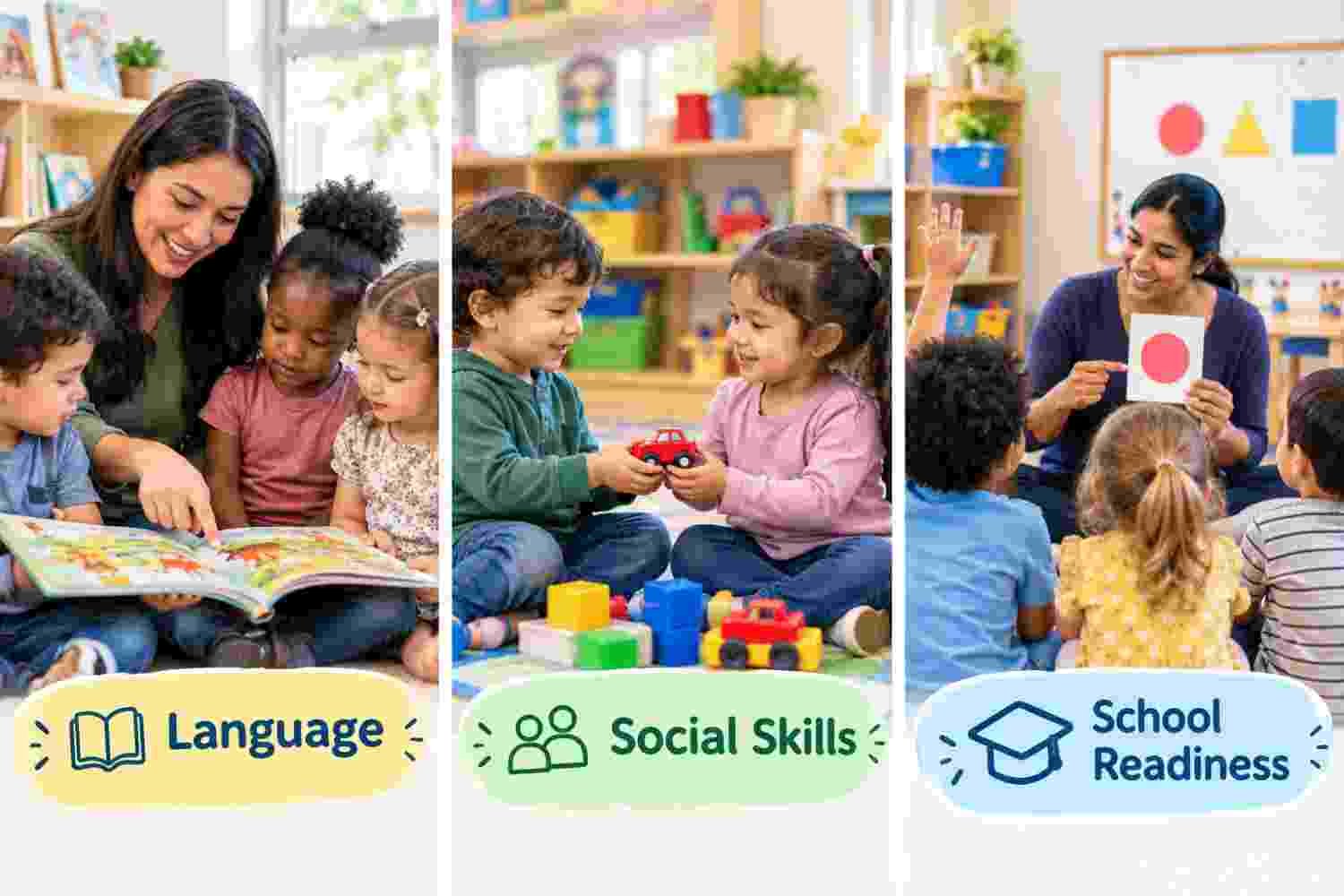
What Happens in Your Child’s Brain Before Age 5
A three-year-old’s brain does more foundational building in a single year than yours will do in the next decade. Every new word, every game of peekaboo, every frustrated meltdown over a puzzle piece that won’t fit wires something that lasts the rest of that child’s life.
This is also why the toddler years feel so exhausting for parents. A brain building at that speed doesn’t come with an off switch, and a kid who seems fine at 4pm can fall apart by 5:30 for no visible reason. Teachers who’ve spent years in toddler and preschool rooms recognize that particular meltdown on sight, the one that starts over a broken cracker and has nothing to do with the cracker. A nervous system that ran out of processing capacity for the day looks a lot like bad behavior and isn’t, and the actual fix is almost always an early bedtime rather than a conversation about sharing.
Daycare, Preschool, or Pre-K: What’s the Difference?
Parents use these three words interchangeably, and the confusion causes real problems when it comes time to enroll or budget. Each one covers a different age range and does a different job.
Parents use these three words interchangeably, and the confusion causes real problems when it comes time to enroll or budget. Each one covers a different age range and does a different job.Daycare exists for working parents who need reliable, safe care during the day, and it usually holds the youngest kids. Preschool starts introducing structure and group learning once a child can sit through a short activity, and the jump from daycare to preschool often happens somewhere around age two without a family even choosing a specific date for it. Pre-K is the year right before kindergarten, built specifically around the skills a kindergarten teacher will expect on day one. A three-year-old belongs in preschool, not pre-K, no matter how advanced the parent thinks the kid is, and putting an advanced three-year-old into a room built for four-year-olds usually backfires socially before it ever helps academically.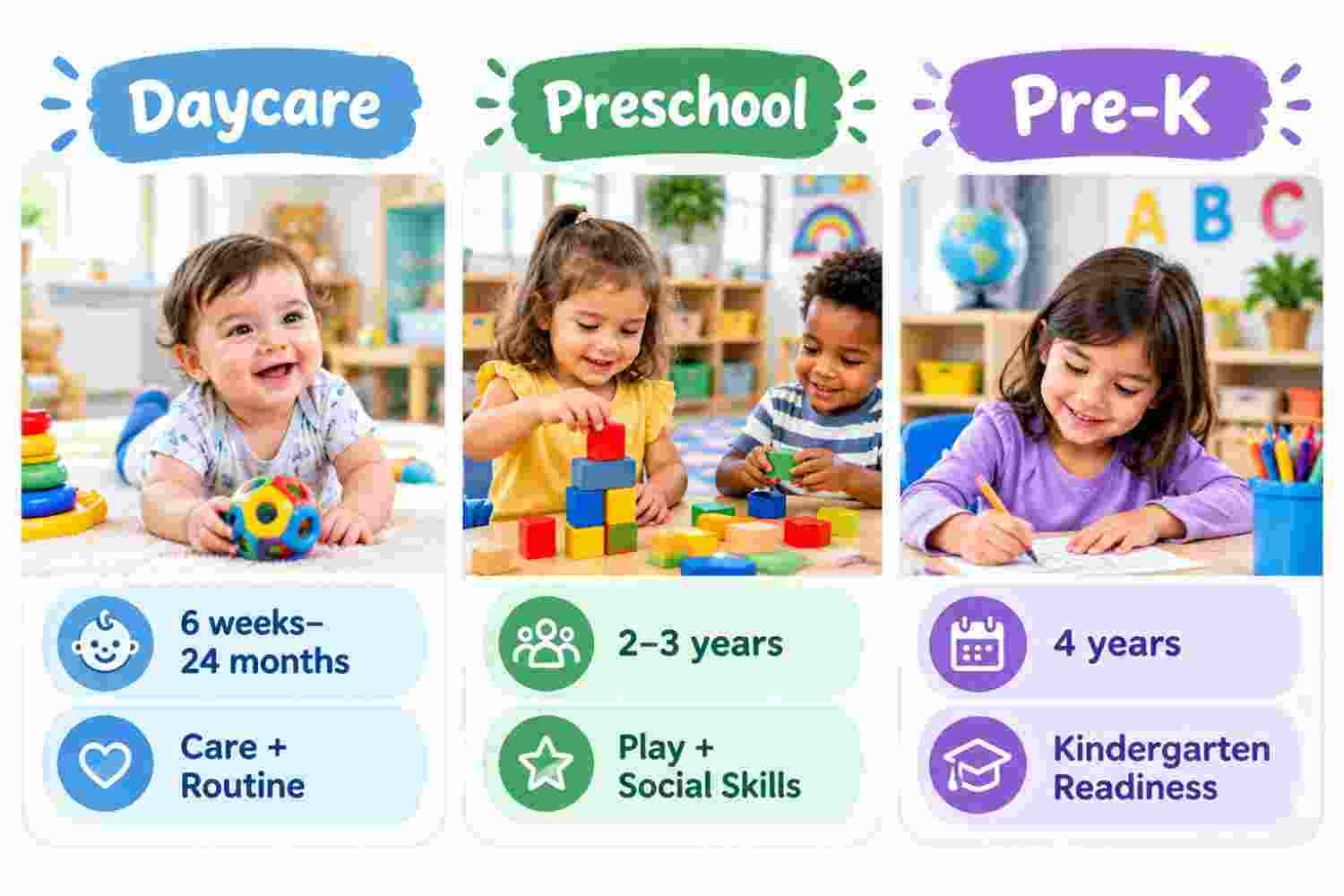
The Real Benefits Parents Should Actually Care About
Language Comes First and Fastest
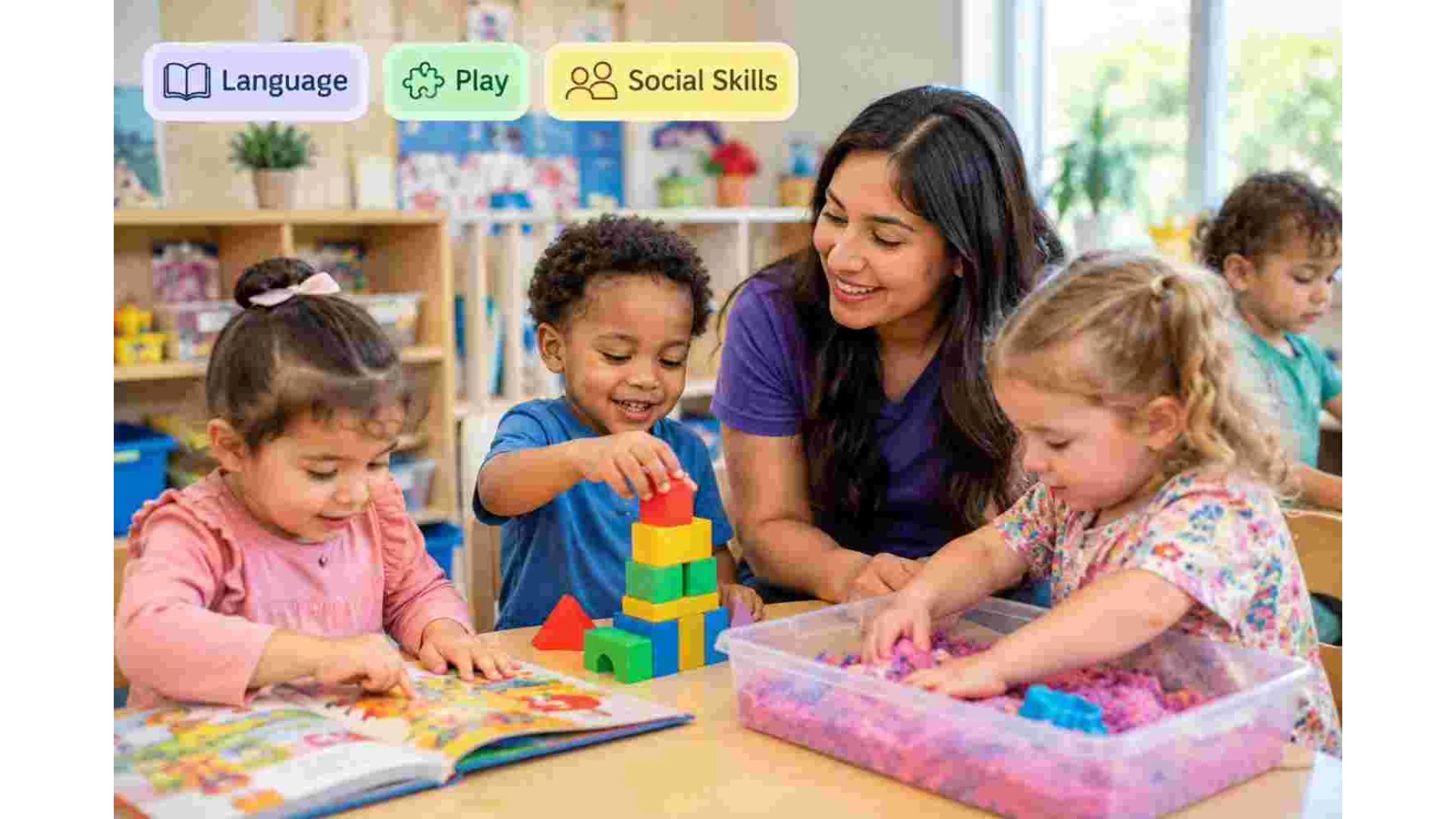
A child hearing new vocabulary from a teacher, a group of peers, and structured story time picks up words at a different rate than a child getting the same twenty phrases repeated at home all day, through no fault of the parent, simply because a classroom introduces more raw input.
Social Skills Come From Other Kids, Not From You
Sharing, waiting a turn, and reading another kid’s frustration before it turns into a shove are skills that require other kids to practice on. A three-year-old can’t learn to negotiate a shared toy with a parent, because a parent almost always gives in first.
School Readiness Shows Up Last, and Matters Most
School readiness shows up last and matters most in September of kindergarten year. A child who has already sat through circle time, followed a two-step instruction, and lined up without being told twice walks into kindergarten with one less adjustment to make, on top of a new building, a new teacher, and twenty new classmates all at once. That familiarity matters more than academic superiority at this age, mostly because a kindergarten teacher can teach letters but can’t teach a room full of five-year-olds how to sit still on day one if nobody’s practiced it yet.
Is It Okay to Choose Daycare Instead of Staying Home?
A parent dropping their kid off at 7am and picking them up at 5:30 is not outsourcing parenting. Structured care during the day and a parent’s presence in the evening do different jobs, and a child benefits from both without one canceling out the other. The bedtime story you read at 8pm does something a classroom never will, and the group circle time at 9am does something a living room with one adult and one kid never will either.
The guilt usually shows up hardest during the drop-off itself, when a toddler cries and reaches back for you and a teacher gently peels them off your leg. That moment is brutal for exactly as many days as it takes the child to trust the routine, usually somewhere between one and three weeks. It says nothing about whether the choice was right. Kids who cry hardest at drop-off are frequently the same ones running straight to the play kitchen without a backward glance the following month.
Is Early Childhood Education Worth the Cost?
Paying for full-time care runs into real money, and no parent should pretend otherwise. Value here depends entirely on what you’re comparing it to, not on some universal verdict that applies to every family and every budget.
A full-time program buys consistency: the same trained teachers, the same routine, and the same peer group every day, which matters more for social development than most parents expect going in. If full-time isn’t realistic right now, part-time programs, parent co-ops, and library-run story and play sessions cover a meaningful chunk of the same ground for a fraction of the cost. None of these options is a downgrade from full-time care, just a different trade-off between structure, cost, and your own schedule, and the right one depends entirely on what your family can actually sustain for the next few years without running yourselves into the ground by February.
What Should You Look For When Touring Any Program?
Watch the classroom before you talk to anyone in the office. A good room has a hum to it, kids moving between activities without a teacher raising their voice, and enough materials that three kids aren’t fighting over one toy.
Ask about the teacher-to-child ratio and get a specific number, not “small groups.” Ask what the daily schedule actually looks like hour by hour, not a marketing description of “play-based learning.” Ask how the program communicates with parents day to day, whether that’s a note home, an app, or nothing until pickup. And confirm the program is licensed, since that single check rules out a surprising number of places that look fine on a walkthrough. None of these questions require any inside knowledge, just the discipline to ask them before you sign anything instead of after, back at home, when a contract is already sitting in your inbox.
Is a Program in Texas Actually Licensed and Safe?
Every legal childcare provider in Texas carries a license from the Texas Health and Human Services Commission, which sets the legal minimum for staff background checks, group sizes, and health and safety standards. A parent can look up any program’s license status directly through the state, and doing that before a tour costs five minutes.
Texas Rising Star sits above that baseline. It’s the state’s own quality rating, and providers earn it through additional standards on curriculum, staff training, and classroom practices that go beyond what basic licensing requires. A licensed program meets the legal floor. The state reviews a Rising Star program independently against that higher bar, and the difference shows up in day-to-day classroom quality more than in anything printed on a wall by the front desk.
Signs Your Child Might Be Ready, and Signs to Wait
A child who can separate from a parent for short stretches without a full meltdown, follow a simple one-step instruction, and show curiosity about other kids is usually ready for a group setting. Interest in books, even just sitting for two minutes of a story, is another good sign.
A child who is still deeply distressed by any separation, isn’t sleeping through most naps, or is dealing with a major life change like a move or a new sibling might do better waiting a few months. A family that just moved across town in June rarely needs a new classroom on top of that in August, and waiting until October changes almost nothing about the eventual outcome. Waiting isn’t a failure and it isn’t permanent, just a matter of starting when the timing fits the kid instead of a calendar.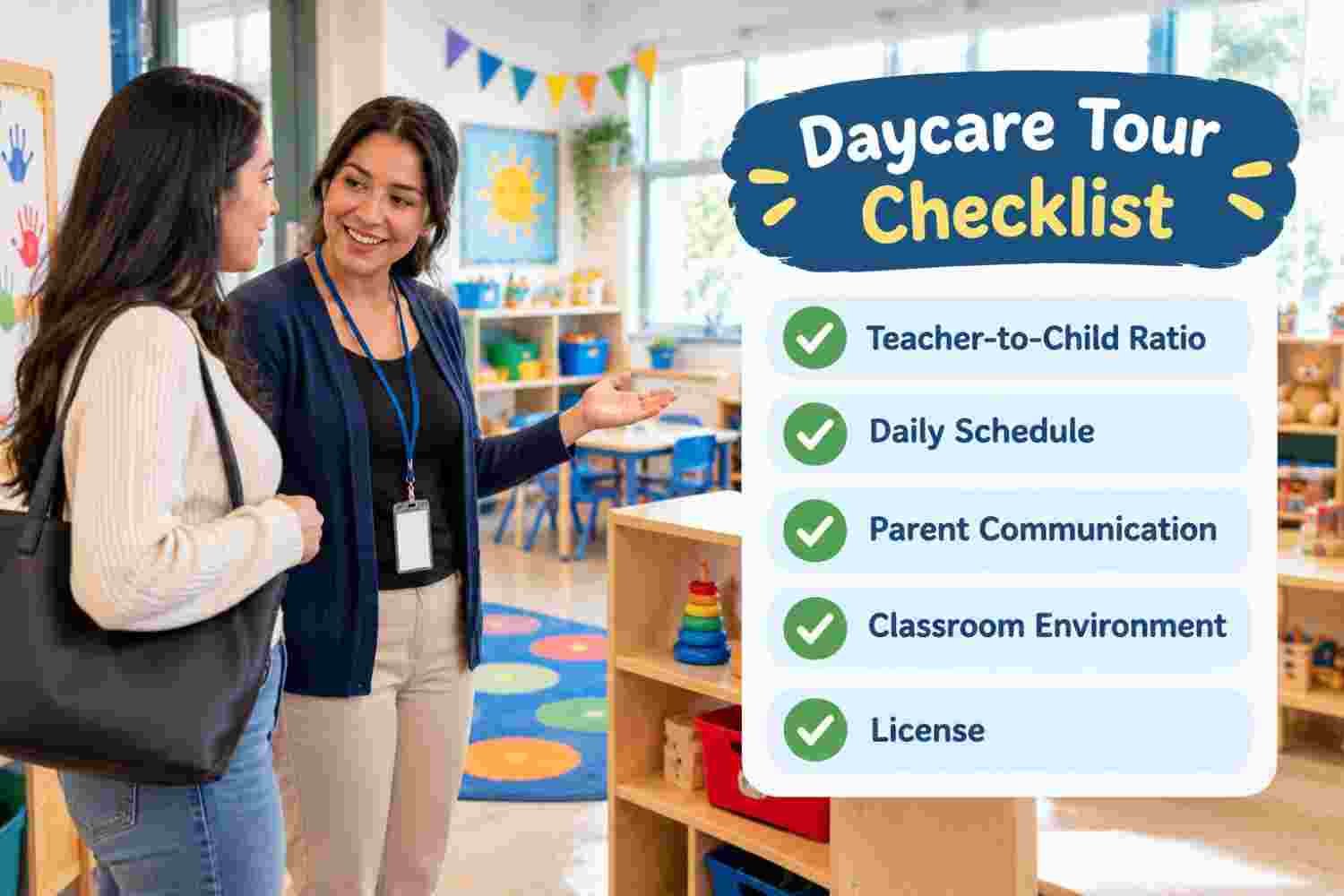
Richmond Learning Academy’s Approach to Early Learning
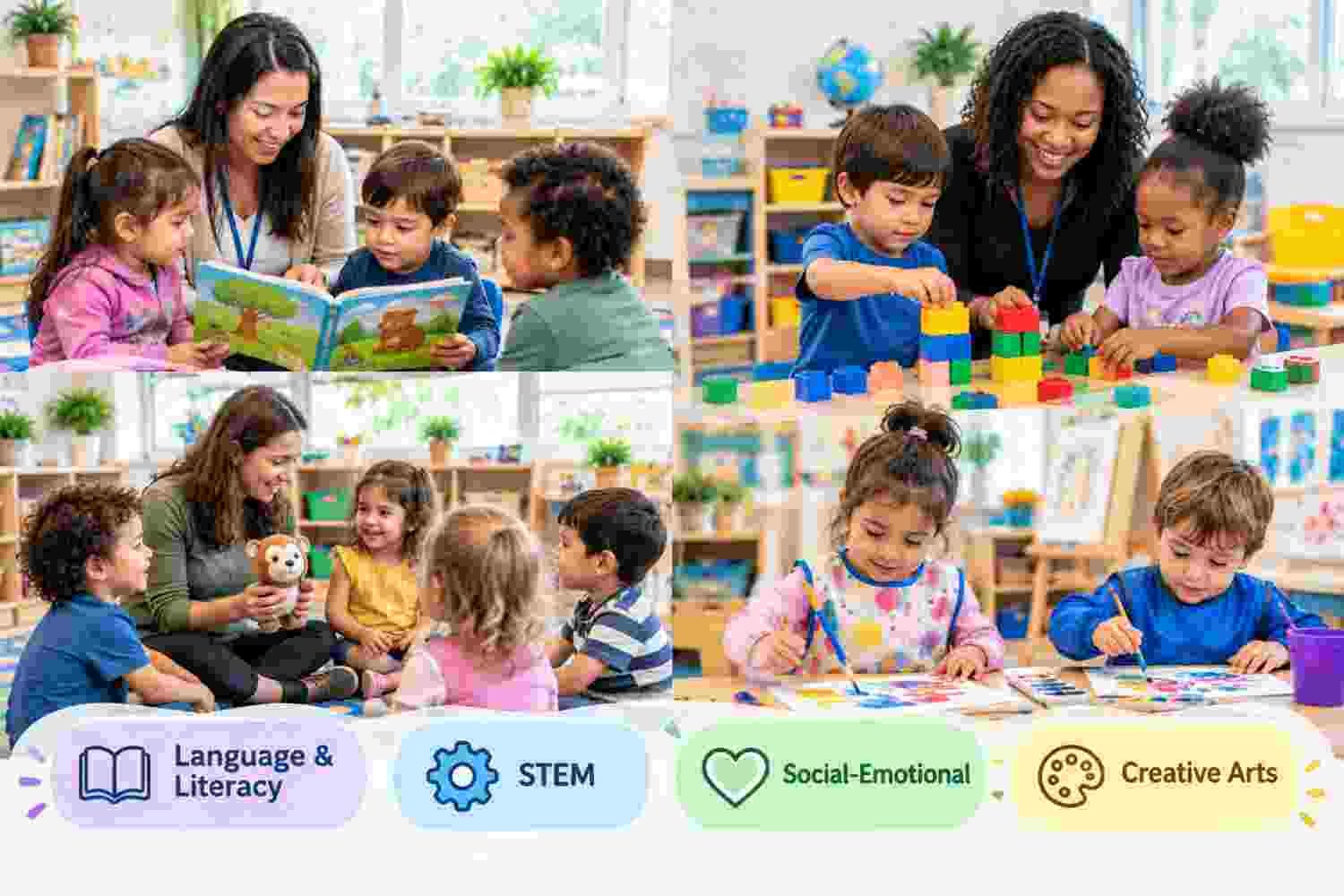
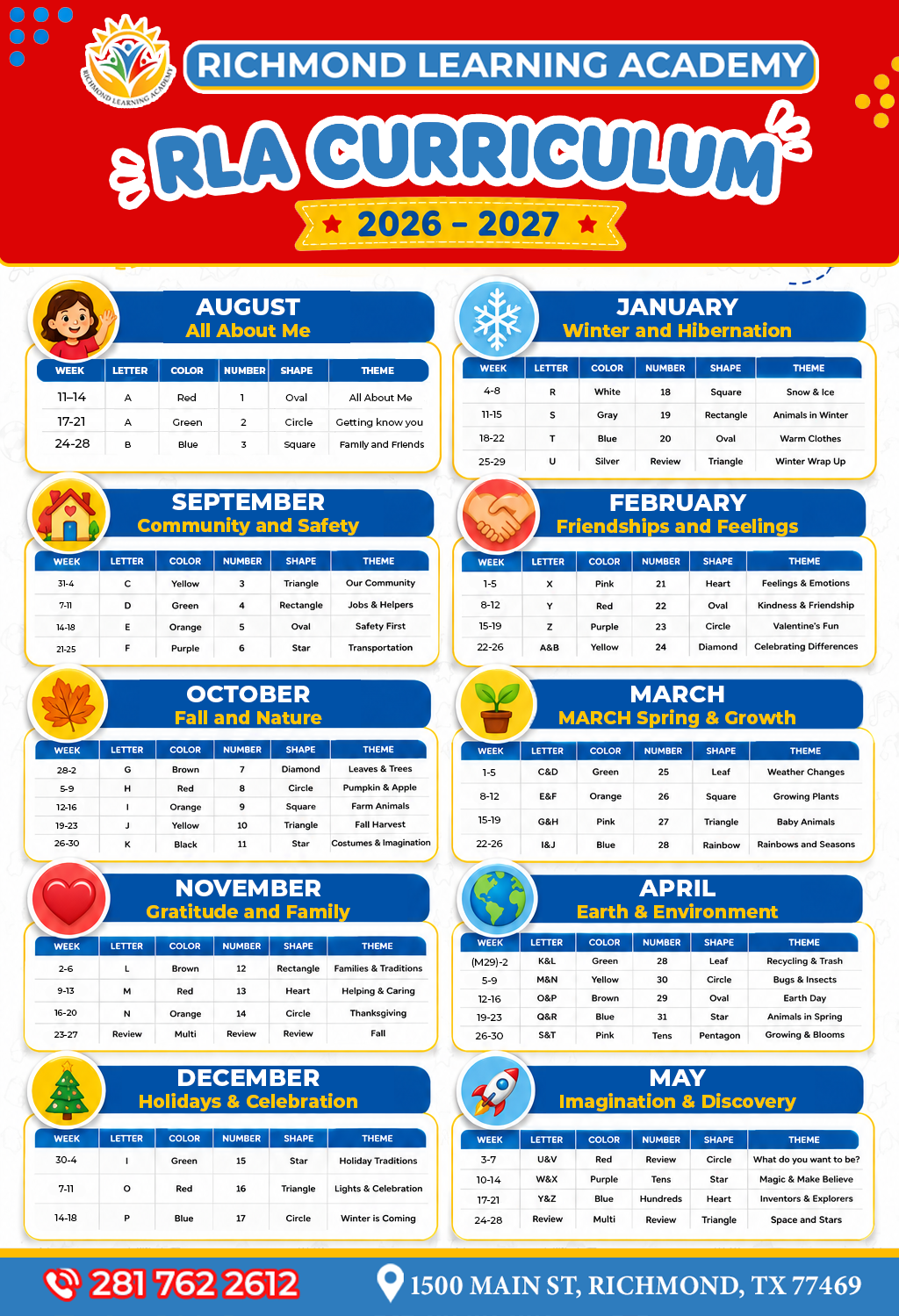
Richmond Learning Academy runs on the Frog Street curriculum, a play-based framework covering language and literacy, STEM, social-emotional learning, physical development, and creative arts inside a daily routine kids can predict and rely on. Founder and CEO Hina Nasir built the program around exactly the licensing and quality standards covered above, holding both a Texas HHSC license and Texas Rising Star certification.
Families come from Richmond, Rosenberg, Sugar Land, Missouri City, and Katy, and every classroom runs on secured entry, camera monitoring, background-checked staff, and daily health screenings, with real-time photo updates sent to parents throughout the day. Programs run from infant daycare at six weeks through pre-K at four years, plus after-school and summer care through age twelve. Parents evaluating any early learning center Richmond TX has to offer are welcome to walk the classrooms and see the routine firsthand before enrolling anywhere.
The Bottom Line for Richmond-Area Parents
Back in that driveway, watching another kid count to twenty, neither parent is doing it wrong. The two-year-old eating a leaf and the three-year-old rattling off numbers both end up in the same kindergarten classroom in a couple of years, and neither entrance interview asks who could count higher at two and a half.
If you want to see what a licensed Rising Star program looks like on an ordinary Tuesday, schedule a tour at Richmond Learning Academy, 1500 Main Street, Richmond, TX, and walk the classrooms yourself before deciding anything.